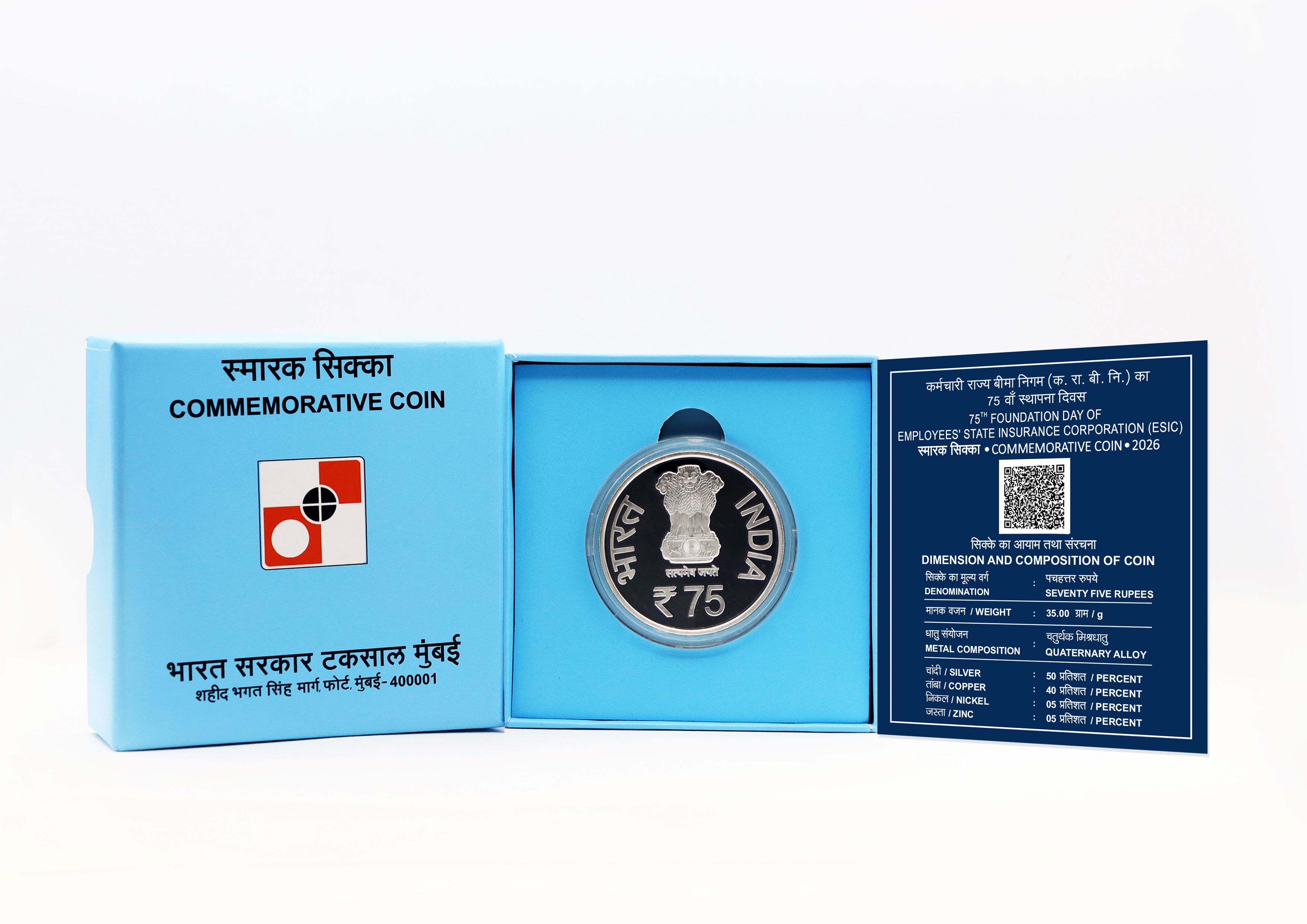
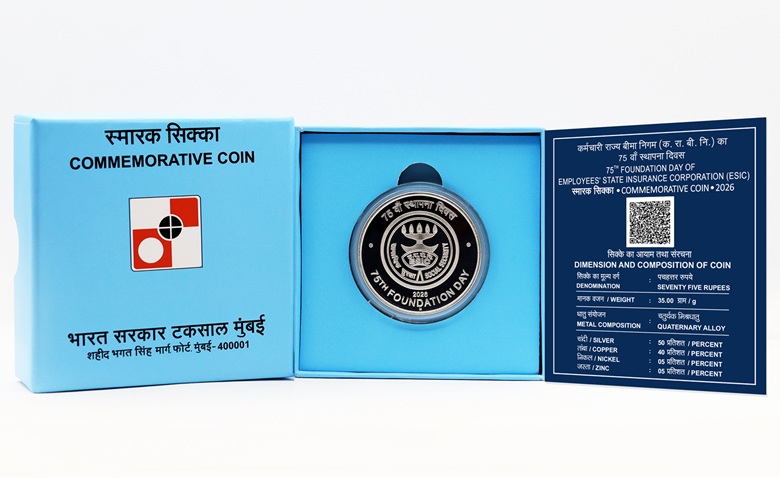
75TH FOUNDATION DAY OF EMPLOYEES’ STATE INSURANCE CORPORATION (ESIC)
The Employees’ State Insurance Corporation (ESIC) is a statutory body established under the Employees’ State Insurance (ESI) Act, 1948, one of India’s earliest and most important pieces of social security legislation. The Act was enacted soon after Independence with the objective of providing comprehensive social security and healthcare benefits to workers in the organized sector.
The ESI Scheme was formally launched on 24 February 1952 in Kanpur, Uttar Pradesh, initially covering a limited number of factories and workers. Over the years, the scheme has steadily expanded in terms of geographical reach, wage ceilings and categories of establishments covered.
ESIC functions under the Ministry of Labour and Employment, Government of India and operates on a self-financing, contributory model with contributions from employers and employees. The Corporation administers a wide range of benefits, including medical care, sickness benefit, maternity benefit, disablement benefit, dependents’ benefit and other welfare measures.
From its modest beginnings, ESIC has grown into one of the largest social security and healthcare organizations in the world, serving crores of insured persons and their families through an extensive network of hospitals, dispensaries, medical colleges and tie-up healthcare facilities across the country. The ESI Corporation has come a long way starting from 25000 Insured Persons. Today, ESIC is catering to the social security and medical care needs of around 3.84 crore Insured Workers and 14.91 crore beneficiaries through its infrastructure comprising 166 hospitals, 1603 dispensaries, 17 medical colleges and hospitals (10 newly approved medical colleges), 2 dental colleges, 2 nursing colleges and 3 para-medical college, 65 Regional/Sub-Regional Offices, 612 Branch Offices and 117 Dispensary cum Branch Offices.
Over more than seven decades, ESIC has played a pivotal role in strengthening India’s social security framework, continuously adapting to changing socio-economic needs and contributing to the goal of inclusive and sustainable workforce welfare.
Note :Dispatch tentatively in 30 days.
**If the amount is debited once or an error page comes up, wait for order acknowledgement, 6 digit unique order ID will be sent through email.
***DO NOT RE-ATTEMPT FOR THE PAYMENT***
| DENOMINATION OF THE COIN | SHAPE, DIAMETER & NO. OF SERRATIONS | WEIGHT | METAL COMPOSITION |
| Seventy five Rupees | 1. CIRCULAR 2. DIAMETER – 44 mm 3. SERRATIONS – 200 | 35g | Quaternary Alloy
Silver – 50.0 percent.Copper – 40.0 percentNickel – 05.0 percentZinc – 05.0 percent |